
本文另有中文版。
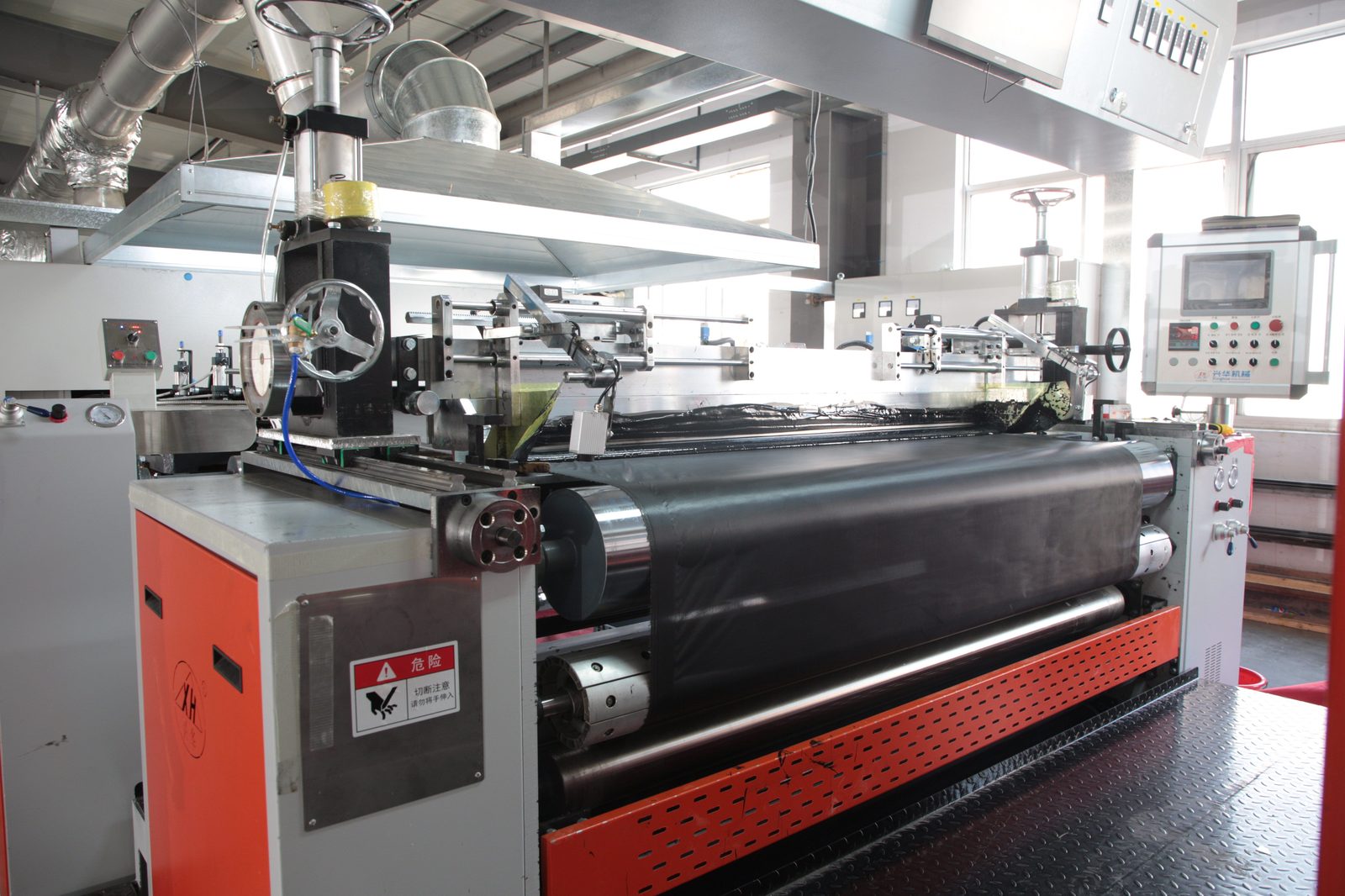
Mesh fabric is not always a large product, but the process requirements are concentrated: the yarns have to be locked, the coating has to be anti-stick and anti-slip, and the fabric has to withstand heat. Wuxi Qianzhou Xinghua Machinery Co., Ltd. publishes a dedicated mesh fabric coating machine for this use. The official page names mesh fabric as the intended material, lists yarn locking, anti-stick and anti-slip performance and heat resistance as the functions, and gives applications including automotive seat cushions, seat covers and large advertising meshes.
The public platform is the same family as the textile coating machine, given as TC-180-420: nominal width 1,800–4,200 mm (180–420 cm), mechanical speed 5–65 m/min, typical running speed 30–40 m/min; the heat source may be thermal oil, gas or steam, with a published configuration share of thermal oil 90%, gas 5% and steam 5%; the oven is configured to the customer’s requirements. As with other special-purpose coating machines, a mechanical speed limit is not the process speed at which a given fabric and paste will run stably, and proposal parameters are locked at enquiry against samples and required output.
Sizing on mesh fabric is often closer to padding, because the paste has to wrap the intersections and lock the yarns, rather than only leave a film on the surface. The official coating process is written as infeed, then padding or knife application, then drying and setting; heads are listed as padding, knife or combination heads, locked in the quotation. When the coating or the coat weight changes, the combination coating head (CN205995709U) is still a change of head, not a dismantling of the machine.
Even coat weight is equally sensitive on an open mesh: if the set value drifts, yarn locking and anti-stick performance drift with it. Electro-hydraulic servo control (CN206111703U) holds the gap to a set value, rather than chasing it by hand. The combination infeed frame (CN205995743U) and the temperature-controlled infeed frame (CN205995744U) deal with the selvedge and infeed temperature before the head. Heat resistance is also related to whether the oven is zoned; see Heat source on a textile coating machine.
Key rollers and frames are processed in-house; the main workshops and final assembly share the Qianzhou site; and complete machines are trial-run before shipment — that is the manufacturing arrangement already published. Machining rollers and frames to the order is what allows requirements such as yarn locking and anti-stick performance to be discussed as structures that can be trial-run, rather than as a standard machine shipped as it stands. The official figure of 119 patents is a company total; discussion of the mesh machine should still rest on the named patents and the functions on the product page.
The predecessor factory started in 1993; the limited company was established in 2003 under the business license. High-tech enterprise certificate GR202532008525 was issued on 19 December 2025 and is valid for three years. ISO 9001 certificate 54326Q00104R253 covers “manufacture of textile finishing equipment and carpet finishing equipment” and is valid until 29 September 2029.
The company will attend ITMA ASIA + CITME 2026 in Shanghai, 20–24 November, booth H8.1-D11. Enquiries: 0510-83397635 / 0510-83382635, www.xhmachinery.com.